
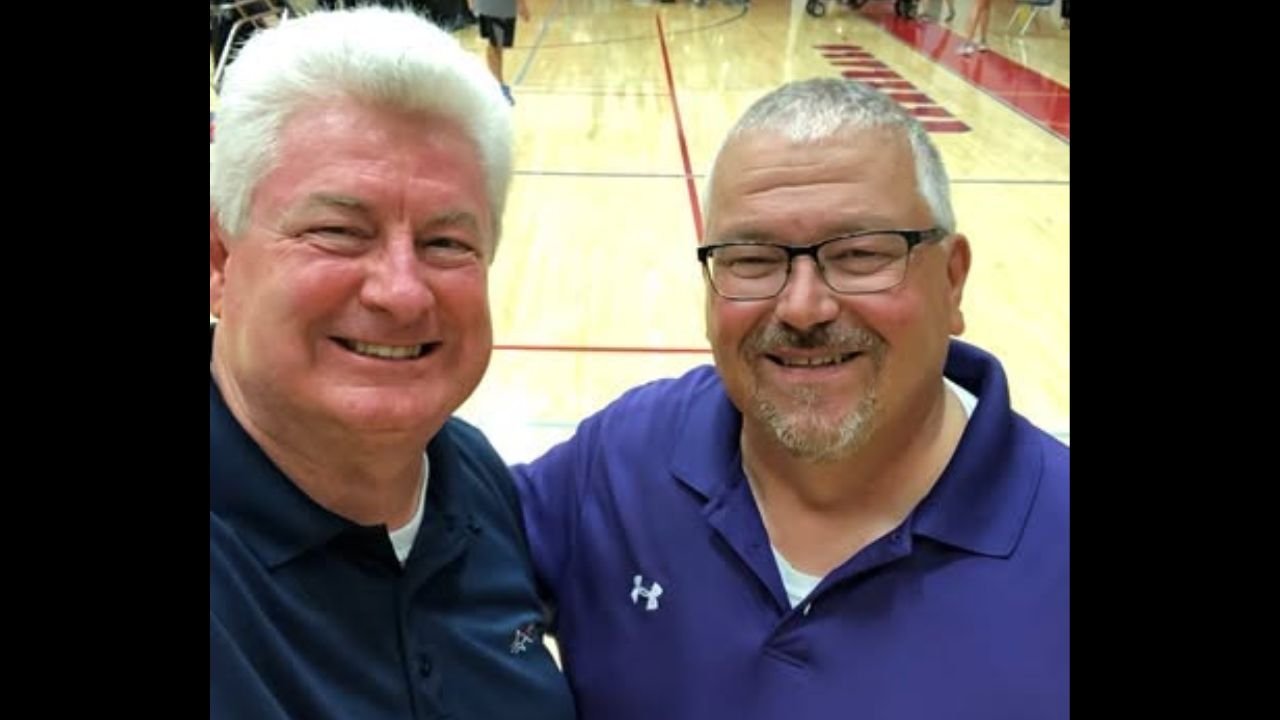
Kentucky’s music education community is mourning the death of Chuck “Winder” Smith, the longtime band director whose work at Lafayette High School and other Kentucky programs influenced generations of young musicians.
Smith died on September 2, 2026, according to an announcement shared by the Lafayette High School Class of 2001.
The news has brought tributes from former students, music educators and longtime colleagues who remember Smith as much for the way he treated people as for the successful bands he directed.
Across a career connected with Harrison County, Elizabethtown, the University of Kentucky and Lafayette High School, Smith became one of the recognizable figures in Kentucky school-band education.
His influence was formally recognized in 2024 when the Kentucky chapter of Phi Beta Mu, the international bandmasters fraternity, inducted Smith into its Hall of Fame.
For former students, however, his legacy is measured less by honors than by the confidence, discipline and love of music he encouraged in the rehearsal room.
Who Was Chuck Smith?
Chuck Smith devoted much of his professional life to teaching and directing young musicians.
His path toward music education began years before he stood in front of his own band.
Smith attended Harrison County High School, where his ability as a trombone player caught the attention of educator Bob Gregg. According to a remembrance shared after Smith’s passing, Gregg recognized something beyond instrumental talent and predicted that the young musician would eventually become a band director.
The prediction proved remarkably accurate.
Smith went on to build a career that placed him at the center of Kentucky’s school-band community, eventually becoming closely identified with Lafayette High School in Lexington.
Early Career
Before Lafayette became synonymous with his career, Smith developed experience in several corners of Kentucky music education.
His professional journey included time at the University of Kentucky, where he served as a senior assistant and developed relationships with musicians and educators who would remain part of his professional circle for years.
He later directed bands at Elizabethtown before continuing his career at Lafayette.
Evidence of his early success remains visible in Kentucky’s professional music organizations.
Phi Beta Mu records show that Smith received an Outstanding Young Bandmaster honor while associated with Elizabethtown High School in 1994.
It was an early indication of the reputation he would eventually establish statewide.
Lafayette Years
Smith’s name became particularly associated with the Lafayette High School band program in Lexington.
Historical Kentucky Music Educators Association records repeatedly identify him as Lafayette’s director.
A KMEA publication documenting the 2007 marching season, for example, listed Lafayette under Smith’s direction as the Class AAAAA state runner-up.
By 2012, Lafayette had reached another major milestone.
Lexington-Fayette Urban County Government records show that city leaders formally recognized the Lafayette “Pride of the Bluegrass” Marching Band after its 2012 state championship. Smith appeared before the council with the band’s drum majors as the group prepared for another prestigious opportunity: traveling to Pasadena to participate in the Rose Parade.
Those moments represented years of rehearsals, travel and demanding preparation behind the scenes.
More Than Marching
Smith’s work was not confined to marching-band competition.
His students also participated in concert ensembles, percussion programs and honor-band opportunities.
Kentucky Music Educators Association records from 2014 identify Smith as director of Lafayette High School’s Wind Symphony, which received a top assessment at that year’s concert-band evaluation.
He also served as a guest conductor outside Lafayette.
A 2009 report on the Eastern Kentucky University Honors Band identified Smith, then Lafayette’s director of bands, as one of the conductors leading participating high school musicians during the event.
Such appearances expanded his influence beyond students enrolled directly in his program.
Building Musicians
The competitive achievements tell only part of Smith’s story.
Former students remembering him after his death have focused heavily on his ability to motivate.
Being part of a successful high school band requires far more than learning music. Students spend countless hours rehearsing, correcting mistakes, memorizing performances and learning how their individual responsibilities affect an entire ensemble.
Smith understood that process.
Those who learned from him have described an educator capable of pushing students toward demanding goals while teaching lessons about preparation, teamwork and perseverance.
For many, those lessons remained relevant years after their final performance.
A Teacher of Teachers
Smith’s influence also spread through musicians who eventually became educators themselves.
One tribute from Mike Paul credited Smith as one of two people who helped shape the educator he later became.
That kind of influence creates a legacy difficult to calculate.
A teacher may directly instruct hundreds or thousands of students during a career. When those students become teachers themselves, the original educator’s ideas and standards can continue reaching young musicians decades later.
Evidence of that continuing influence can still be found in band programs outside Kentucky.
Griffin Lober, now a high school band director in Illinois, notes in his professional biography that he student-taught at Lafayette High School under Smith.
National Stage
Lafayette’s reputation also gave students opportunities beyond Kentucky.
In 2016, Music for All selected Lafayette student Claire Howell to participate in the Bands of America Honor Band for the 2017 Tournament of Roses Parade. Contemporary reporting identified Smith as her Lafayette band director.
Smith’s bands had already experienced Pasadena directly.
Following Lafayette’s 2012 Kentucky state championship, the program traveled to California to participate in the 2013 Rose Parade.
For high school musicians, opportunities of that scale can become lifelong memories.
Smith helped create an environment in which those experiences were possible.
Major Honors
Kentucky’s band community formally recognized Smith’s contributions multiple times.
Phi Beta Mu’s Kentucky chapter lists him as its 2002 Outstanding Bandmaster, following the earlier Outstanding Young Bandmaster recognition he received while at Elizabethtown.
More than two decades later came another distinction.
In 2024, Smith was inducted into the organization’s Hall of Fame alongside fellow Kentucky educator Brad Rogers.
The honor placed Smith among a distinguished group of educators recognized for sustained contributions to band music in Kentucky.
It also arrived decades after his first professional recognition, illustrating the longevity of his influence.
Remembering Winder
The tributes appearing after Smith’s death reveal a man whose reputation extended beyond trophies, ratings and marching formations.
He has been remembered as a southern gentleman, mentor, motivator and dedicated educator.
Friends and former students have also expressed support for Wina, Ethan, Liz, Jackson and the wider Smith family.
Those personal remembrances provide another dimension to an educator whose public identity was so closely connected to music.
Behind every rehearsal and performance was a husband, father, relative, colleague and friend whose relationships extended far beyond school grounds.
His Legacy
Chuck “Winder” Smith’s impact on Kentucky music education will remain visible long after his passing.
It lives in former Lafayette and Elizabethtown students who still remember rehearsals decades later. It continues through musicians who entered education themselves and now teach another generation. It can also be found in the history of programs he helped build and performances that students once prepared under his direction.
The awards provide a permanent record of professional achievement. His 2024 Phi Beta Mu Hall of Fame induction stands among the clearest acknowledgments of the respect he earned from fellow band directors.
Yet Smith’s broader legacy belongs to the people.
For generations of Kentucky students, he was the person standing in front of the ensemble, asking them to listen more carefully, work harder and discover what they could accomplish together.
With his death on September 2, Kentucky has lost an influential music educator.
The sound of the bands he once directed may fade at the end of a performance, but the lessons Chuck Smith passed to his students continue through the musicians, educators, families and friends whose lives he helped shape.